Every organisation has that account.
The one hidden in a vault.
The one nobody logs into.
The one everyone forgets exists…until everything breaks.
In the world of identity, access, and cloud‑first operations, this account has a name:
It’s the closest thing IT has to a defibrillator, rarely touched, but absolutely critical when everything else fails. And yet, it’s one of the most misunderstood, undergoverned, and dangerously neglected components of modern security architecture.
I’ve seen both sides of the story.
I’ve watched teams treat their Break Glass account like a dusty spare key.
I’ve also watched teams saved by it when identity providers collapsed, MFA went offline, and every admin, including global administrators, was locked out.
Your Break Glass account is either your greatest resilience asset… or your biggest security liability. There is no in‑between.
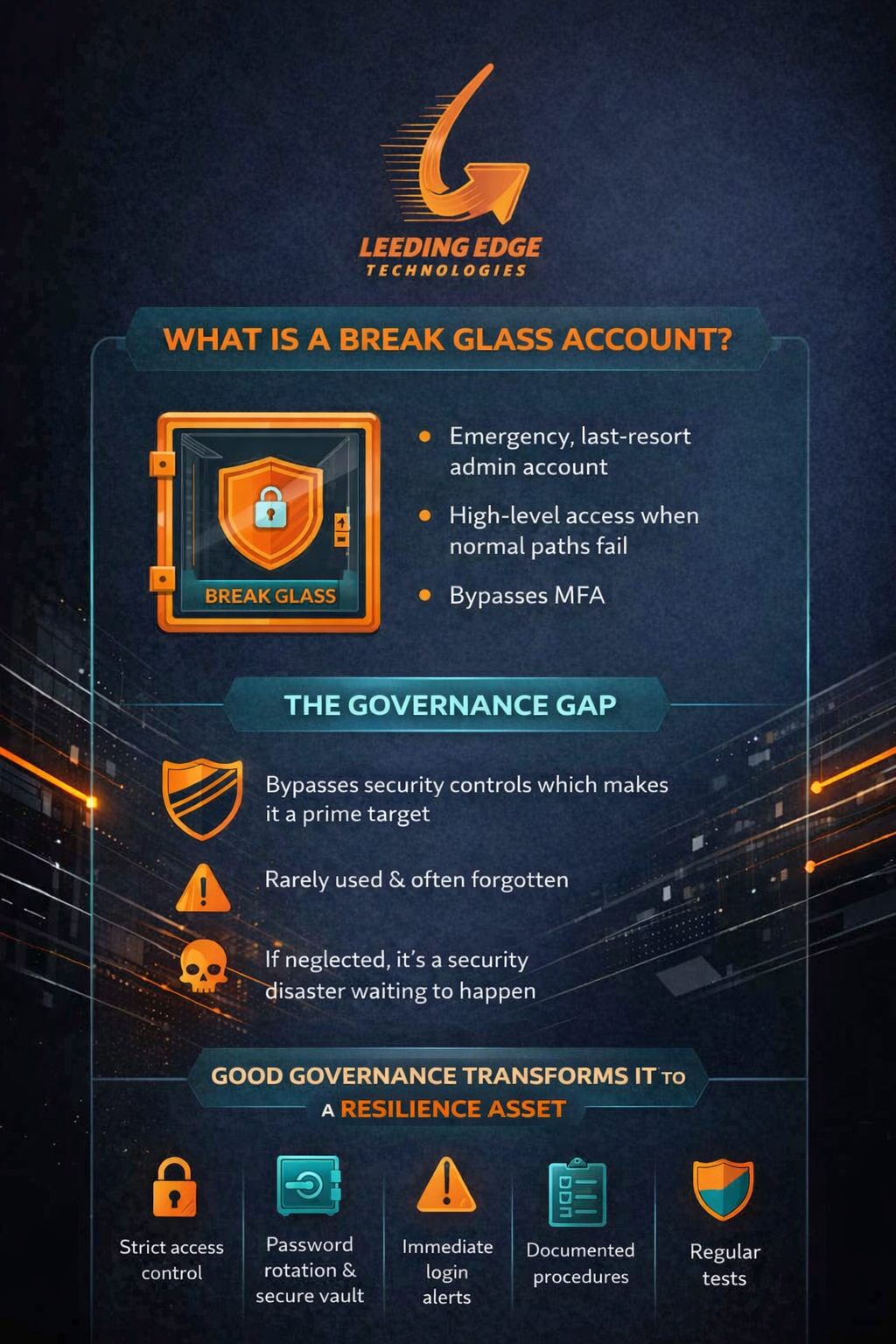
Break Glass accounts sit in a unique and precarious position. They are intentionally designed to bypass normal controls so they can be used during emergencies. But that same design makes them extremely attractive to attackers.
By design, a Break Glass account must work even when MFA systems fail. That means it often has fewer authentication barriers — and therefore a higher blast radius if compromised.
This account isn’t just privileged. It’s ultra‑privileged. It can override identity systems, reset access, and take control of the environment.
Anything that isn’t used regularly tends to drift out of compliance:
And attackers know this. Break Glass accounts are one of the first things threat actors look for once they gain a foothold.
The organisations that survive outages, identity failures, and cyber incidents have one thing in common:
They treat their Break Glass account like a lifesaving device, not a convenience.
Strong governance transforms this account from a vulnerability into a resilience asset.
Not in a drawer. Not in someone’s notebook. Not in a shared folder. A proper vault with access logs, alerts, and strict controls.
If the account is used outside an emergency, that’s not “helpful admin work.” It’s a red flag.
A Break Glass login should trigger alarms — literally. SMS, email, SIEM, SOC dashboards. If someone uses it, everyone should know.
An untested Break Glass account is a broken Break Glass account.
Testing ensures:
Who authorises its use?
Under what conditions?
What steps must be followed?
What happens after the incident?
Ambiguity is the enemy of resilience.
You don’t wait for a fire to check if the extinguisher works.
You don’t wait for an outage to discover your emergency account is expired, misconfigured, or worse compromised.
If you haven’t reviewed your Break Glass governance lately, this is your sign.
If you’re not fully confident it would work in an outage, now is the time to fix it and if you need guidance, We are happy to help.
← Back to BlogExplore how our cybersecurity and governance services help businesses build resilience, reduce risk and stay protected.
Explore Services